The Rejection, & Return, of Beauty in Representations of Ukraine
As is the case with all writing around beauty, it benefits the debate to define exactly what we mean by a quality so nebulous. Writers as far back as Voltaire1In Dictionnaire Philosophique, but see also Plato, Winkelmann, Kant, Hume, Nehamas, and many others, for more on the subjective and social nature of beauty. in 1764 have recognised that ideas of beauty are not consistent across different communities, but are socially constructed, adding further complexity to definitions. This is especially important when considering photographic representations of another country. While the debate is considerably more multifaceted than simple dictionary definitions (and will be expanded on throughout this essay), the Oxford Dictionary gives us a solid starting point as "a combination of qualities, such as shape, colour, or form, that pleases the aesthetic senses, especially the sight." Specifically related to photography I would like to add attention to light, tonality and sharpness, alongside ideas around youth2John Coplans, interviewed by Robert Berlind for Art Journal (1994) [reprinted in Art And Photography (2007)] angrily declared that our culture agrees that "old is ugly". and wealth3Adorno says, "in short poverty is ugly" (1970).. As Bate (2000)4Reprinted in Art And Photography (2007), as well as quoted in Photography: The Key Concepts (2009). points out, much of this is achieved by things (from compositional elements to poor peasants found working in the fields) being in their "right place". Robert Adams (1989) defines beauty similarly, as "form".
One distinction is that the successful application of an aesthetic process and 'beauty' are not, for this essay, the same thing. This is admittedly at odds with Fry (1909) who believed that the term could be applied to "the aesthetic approval of works of imaginative art where the objects presented to us are often of extreme ugliness." The key concern of this discussion is to investigate whether beauty offers a way to engage with the viewer on a meaningful level or whether an aesthetically pleasing image is a distraction to establishing a photo's "meaning", especially in regard to representation.
The first section of this discussion will investigate what happens when a photographer makes the deliberate aesthetic decision to reject beauty, as Boris Mikhailov did in his Case History work, looking at why this made the work so emotionally affecting, yet challenging to engage with. I will also examine work by Michal Chelbin and Yelena Yemchuk, photographers working in the art documentary space using a clear aesthetic standpoint that draws on beauty. In looking at photographic work made in a country that is (as of the time of writing) under invasion, we should also be mindful of Winkelmann's belief that beauty is recognised in current viewing of the work, not at the time of its creation5All the work discussed in this essay, and collected in the portfolio, was made before the Russian invasion of Ukraine..
All of the work discussed, and collected in the images of the portfolio, is made in Ukraine6Neither the portfolio nor this discussion includes photojournalism, instead focusing on work made for photobooks and the gallery sector. Michal Chelbin and Yelena Yemchuk are commissioned for editorial and fashion photography, work that sits aside, but has an influence on, their photos discussed and shown here.. The difference in representation of the people and the life in this complex, diverse and long-troubled country seems like a suitable place to contrast the approaches of beauty and a more brutal aesthetic approach. The contrast of these photographers working in the same environment suggested to me that an investigation into the role of beauty in photography could benefit from being ringfenced by this geographic boundary.
"The time for beauty is over," declared Flaubert in 18527In a letter to Louise Colet., feeling it had no use at that present time, though we might return to it.
For many years artists, and art critics did not feel the need to revive it. Modernism valued the conceptual framing of the idea, typified by Duchamp's Readymades (which attempted aesthetic indifference), and the aesthetics of form. Post-modernism broke down ideas of taste and embraced the political. The avant-garde preferred instead the thrill of the sublime (Steiner, 2001b). Beauty became saccharine, tied up with style, design and, worse, marketing (Beech, 2009). Lorand (2002) saw beauty's bond with art as severed, ostracised from philosophical discussions. In 1994 Hickey petitioned for a return to prettiness in art8He went beyond merely calling for the return of beauty in art by curating the 2001 Santa Fe biennale, Beau Monde: Toward a Redeemed Cosmopolitanism., or at least the art market, something Stallabrass (2013) sees at cyclical with beauty tied to boom periods. Harbison (2016) saw this return as useful, a trojan horse to enable us to see things anew.
Boris Mikhailov's Rejection of Beauty & Embrace of the Abject
After the fall of the communism and the Soviet Union, the new Ukrainian capitalism lacked the institutions to cope with a homelessness that brought a new underclass in Boris Mikhailov's hometown of Kharkov. Since the 1970s, Mikhailov had made a name for himself as a photographer, rejecting the Socialist realism that romanticised, and beautified, life under Communism (as Williams (2001) puts it, "safe images of fertile landscapes, smiling children and lyrical still lives") in favour of more conceptual photography that was critical of the state. His documenting of Kharkov's homeless was a continuation of this previous work, albeit now he was holding a mirror up to post-Soviet capitalism.
"It was important that I took their photos while they were still normal people," he says in the essay that starts the Case History (1999) book, recognising that those he was photographing were on such a steep downward spiral that many would soon be dead9Three of the subjects in the first sequence in the book were dead within two months of the project starting, something Mikhailov says was "doomed to happen".. However, photographically these were not normal people, and a world away from the lionised heroic workers of Socialist realism.
Many of the 450 photos in Case History show nakedness, disfigurement, drunkenness and substance abuse, including by children, and a wear and tear in a society that is almost threadbare. Beauty was conspicuously absent. In their review of the MoMA exhibition, where the bleak prints were shown eight foot tall, the New York Times (2011) declared the photos "hard to look at" and believed the subjects did not elicit empathy.
A diptych that is deeply troubling, but not controversial enough to stand out for specific criticism by those offended by Case History, falls within a sequence that shows a street drinking session at night. An elderly woman with a pot belly and a ruddy face pulls up an old-fashioned dress to reveal her genitals. She looks away from the camera, potentially embarrassed by the situation she finds herself in. She holds an unlit cigarette in her hand. It is not clear if this is a bought luxury or a payment for the sexual (but deeply unerotic) performance she is giving. Mikhailov has been open about giving money to his subjects to pose in his photographs, something many documentarians find untenable10Misiano (2009) points out that so important is this performative element to Mikhailov's work that he underlines it by being in the photos, even handing over money on camera to his subjects. Mikhailov has talked of the transactional element mirroring post-Soviet society, but also of a moral need to help these people survive.. But beyond those concerns that the subjects are now performers, Mikhailov's harshest critics highlight the sexual nature of these paid for acts. Mey, in Art And Obscenity (2002), find Mikhailov's "revulsion-death-life-art" preoccupation with sexuality and sexual transactions the most disconcerting component of the work. In Picturing the Self (2006), Doy found the disrobed portrayal more disturbing than the poverty. The photographer says their nakedness with their clothes and possessions in hand was important, depicting them as if heading to the gas chamber, heading to inevitable death, poverty as slow violence. Bull (2009) suggests this transaction "highlights the oppression represented by the offer of the body for money."
Despite the state banning such photos11Mikhailov lost his job in 1966 when it was discovered he had taken naked photos of his wife., the naked flesh in Case History is nothing new in Ukrainian photography, with the Kharkiv School Of Photography12See work by the Kharkiv School in the portfolio from Viktor & Sergiy Kochetov, and Evgeniy Pavlov including naked bodies from Roman Pyatkovka. (of which Mikhailov was a member) frequently depicting bodies as fragile and animalistic, but also joyful13A conversation at Photo London 2022 with the Alexandra de Viveiros gallery, representing the Kharkiv School, revealed that there had been no sales of the school's raw work, which was contrasted by the popularity of Elena Subach's crisp and saturated photos at the same event.. While some of the subjects (or models, the line is so blurred as to be unclear) in Case History pose in the manner of softcore pornography, more frequently the men and women are showing flaws: wart-covered penises, scars, age-ravaged bodies. Not only is this a world apart from the typical naked bodies of the art space, from the ideal form of Michelangelo's David to Edward Weston's immaculately crafted nudes14"I am old-fashioned enough to believe that beauty exists as an end in itself," he wrote in his Daybooks in 1932., it is also tonally different from Mikhailov's 60s and 70s depictions of nakedness, for example the fun and carefree (albeit rough around the edges) images collected in Suzi Et Cetera (2007).
The woman's nakedness in the diptych is typical of the battered bodies in Case History. Her stomach is distended and her pubic hair spreads down her legs, which also have hair, at odds with gender beauty norms of the time15Despite the fashion in some circles for body hair, this norm has arguably changed little since 1999.. Her face and neck have a deep tan indicating that she spends a lot of time outside. The tanline follows the dress' neckline which suggests that this might be the only clothing she has been wearing. This is not a beach tan from a holiday. The photo is strongly, almost sickeningly, saturated where it is not washed out from the camera flash. The background falls quickly into darkness. The top of the woman's head is cropped out of the frame, as are her feet. The bench is not straight with the frame of the photo. This is not an artfully crafted photograph, looking more like a snapshot taken on a disposable camera. Misiano (2009) notes that Mikhailov works quickly and instinctively, paying little attention to the viewfinder. This "practice of negation" as T.J. Clark calls it, a deliberate rejection of a previously established set of skills can be a means to counter the privileges of a "historical version of beauty" (Beech, 2009).
Aware that the aesthetic can compromise an ideology, Mikhailov used poor quality as subversion. Or more accurately he used what he called "statistically average" quality. In the late 90s the film labs found for years on British high streets began to pop up in Ukraine and Mikhailov applied the amateur printing to represent Soviet inadequacy and ignorance, describing their quality as like a rash on a diseased body16Misiano (2009) points out that as cheap cameras and colour process took hold in post-Soviet vernacular photography, black and white started to become synonymous with an aesthetic approach.. This was at odds what Mikhailov feels was the trend at the time to hide social issues, where everything was "beautiful or fun"17Interview in Beyond Memory: Soviet Nonconformist Photography and Photo-related Works of Art (Neumaier, 2004).. Case History was neither. According to Ilya Kabakov, Mikhailov worried about beauty and aestheticism, asking the Ukrainian artist if he thought his photography was "too pretty"18Quoted in a conversation with Victor Tupitsyn at the close of the Case History photobook.. Elsewhere he has talked of wanting to destroy beauty, as well as any claimed significance (Williams, 2001). Mikhailov would appear to be in accord with Higgins (1976) in her reasoning for shunning beauty, that "moral outrage speaks an extreme vocabulary." Kaplan asks in Unwanted Beauty (2007) whether there can ever be a place for beauty where there has a such a breach of care19As interpreted by Pollock in the Is Beauty Back? debate (2013). (he is talking about the Holocaust, but Case History surely shows a strata of society being wiped up by abject poverty).
In the second frame of the diptych an androgenous figure in an ill-fitting jacket bends over, showing their bare bottom. It is reddened with spots and scabs20It should be noted that due to the importance of relationship in ideas of beauty even bodily imperfections can be considered beautiful, as Charles Baudelaire found of his lover's smallpox scars (Henderson 2018), though that is not what is happening here.. An already disturbing image is given a further level of unease when careful investigation of previous images in the sequence suggests this is not, as it first appears, a wizened old man but an adolescent girl presenting herself21Earlier in the book this cropped haired girl is shown topless, having her breast squeezed by another girl. She is skinny and has small breasts making aging her troublingly difficult.. The contrast between young and old bodies in the two pictures is slight, if there is any at all. Here the attributes of youth that contribute to modern societal notions of beauty like clear skin are absent. An older male figure, slightly bleached out by the flash, and out of the range of the lens' sharpness, watches closely. This figure is Mikhailov himself, one of the many times he appears in Case History, including naked in a bath. Sontag's criticism of Diane Arbus in On Photography (1977) would likely be levelled just as harshly at Mikhailov, that the photographers turn their cameras on the "pathetic, pitiable [and] repulsive" but fail to "arouse any compassionate feelings"22"In photographing dwarfs, you don't get majesty and beauty. You get dwarfs," she writes curtly.. One difference is that Mikhailov lacks the distance that Sontag finds in Arbus, going as far as inviting his subjects into his house to bathe, and, as in the diptych, placing himself into the photographs. Sontag asked if Arbus' subjects recognised themselves as grotesque, something Mikhailov seemingly tackled directly by explicitly informing his subjects that their lives would be spread across magazines, exhibitions and books, so that others could be spared their plight. "The bomzhes had to die in the first rank, like heroes," he said in the introduction to the book, suggesting parallels with Socialist realism, where the subject is celebrated as a hero.
When talking about how documentary photography can pacify the viewer by reiterating the distance between subject and viewer, Rosler, writing in 1981, felt that there is "nothing new" being produced that wasn't offered by those photographing poverty in the 1930s. The question is whether 20 years later Mikhailov's brutal ugliness, a world away from the gentle compassion of, say, Lange's Migrant Mother, helps break down that distance, or in fact adds to it. In 1996 Hal Foster saw a recent revival of "the real", with authenticity brought through the trauma of the real being just out of reach. He is especially interested in photography that depicts the body, especially bodies at their limits. The devastated bodies in Case History play into this, perhaps bringing the real closer to the viewer than ever. Mikhailov isn't presenting these distressed bodies as powerless victims but as representation of forces that could damage us all (Nordgaard, 2016). As Stallabrass (2004) would have it, the work is about the unrestrained capitalism, and should not be confused with the exotic otherness of the Ukrainian homeless subject.
The Return of Beauty in Representation of Ukraine
In his contemporaneous review of the Citibank Photography Prize (which Mikhailov ultimately won), Searle (2001) talks of other nominees and says that "after Mikhailov, the photographs of Hannah Starkey and Hellen van Meene can barely compete," describing them as "well-meant minor league photography-as-art." I suspect he might feel the same about the how the following contemporary photographers have turned their lenses on Ukraine, artists that would appear to join Pollock in seeing "beauty as an effect of artworks that are ambiguous, complicated… and that serve to tickle memory."23Speaking at How The Light Gets In festival's debate Is Beauty Back? (2013). Michal Chelbin is an Israeli photographer who has frequently worked in Ukraine, while Yelena Yemchuk grew up in Ukraine.
Michal Chelbin seems to work in a polar opposite way to Mikhailov in that her work has a soft beauty to it that makes it easy on the eye, but its messages are much less direct than those in Case History. For Chelbin, a good image "is about making the viewer ask questions, rather than get answers" (2021). She adds that, "When I record a scene, my aim is to create a mixture of plain information and riddles, so that not everything is resolved in the image" (2011). While much of Case History can be picked up quickly, it seems Chelbin, even in her photos of juvenile convicts, needs us to spend more time with the photos. This is something that their beauty, Hickey (2012) believes, can help with, seeing visual pleasure to be the "true occasion" to look at any image.
Chelbin gives a dignity and beauty to the Ukrainian juvenile criminals that she photographs in her monograph Swans & Sailboats, and in doing so she humanises them, seemingly aligned with Kant (1764) who declares that beauty is a democratic way of compelling us to be better. Using medium format film and natural light, Chelbin draws heavily on art history, especially Dutch Golden Age painting of the 17th century. Nadia, Sentenced For Narcotics, Women's Prison, Ukraine 2010 shows a very direct influence from Vermeer's use of daylight in an interior space, tapping into notions of a crafted approach. Although the setting is institutional, there is a domestic feel in the lace tablecloth and flowers being worked on. Replace the green of the crisply ironed uniform with blue, and the colour palette could belong to the Dutch painter. Nadia's headscarf and the soft light on her face brings to mind several of Vermeer's most famous portraits. As Sontag says, to take a photo is to confer importance (1977), and here Chelbin has added to making the prisoner significant with the care given to the placement of her subject in the light. Despite the circumstance that Chelbin's subjects find themselves in, Chelbin's measured intimacy seems to look for the beauty in them. Elsewhere in the book, her photo of Vania, convicted of sexual violence, as the title makes clear, brings to mind the angular beauty of the viral mugshot that infamously gained Jeremy Meeks a modelling contract24The post on Stockton Police Department Facebook page has received 96,000 "likes", 24,000 comments, and 11,000 shares..
Richard Misrach finds that in his own work, beauty helps the viewer engage with more challenging ideas, that "it engages people when they might otherwise look away" (2020)25"Probably the strongest criticism levelled at my work is that I'm making poetry of the Holocaust. But I've come to believe that beauty can be very powerful," he tells Melissa Harris in an interview in his Violent Legacies: Three Cantos book, reprinted in Art And Photography (2007).. Chelbin's photographs of these prisoners are complex. By highlighting their crimes (which include murder) she asks us to engage with the ugliness of their lives, but then keeps us involved by representing them at their most beautiful. Scarry (2009) sees beauty as linked to kindness and justice26Essay in Beauty (2009), edited by Beech., here not only the justice of the criminals serving their sentences but justice of a forgiveness and the possibility of a new life. The desire for beauty in art is tied to optimism, according to Charlesworth, who argues that when we are viewing the world as an ugly place, "beauty no longer matters in art" (2016). Just as Chelbin understands agony of incarceration, Yelena Yemchuk recognises the pain that Ukraine is going though, and is reaching for a future for the country she loves, or at very least trying to record something in the past she wants to hold on to. Yemchuk27British Journal Of Photography interview with Paul Stafford (2022). notes that her photos romanticise Ukraine, that even drab or ugly photos have "a little halo of beauty" around them. It was after the first invasion by Russia in 2014 that Yemchuk felt the need to capture life in Odesa. "I felt like Ukraine was finally standing on its own, forging its own identity," she says of the monograph.
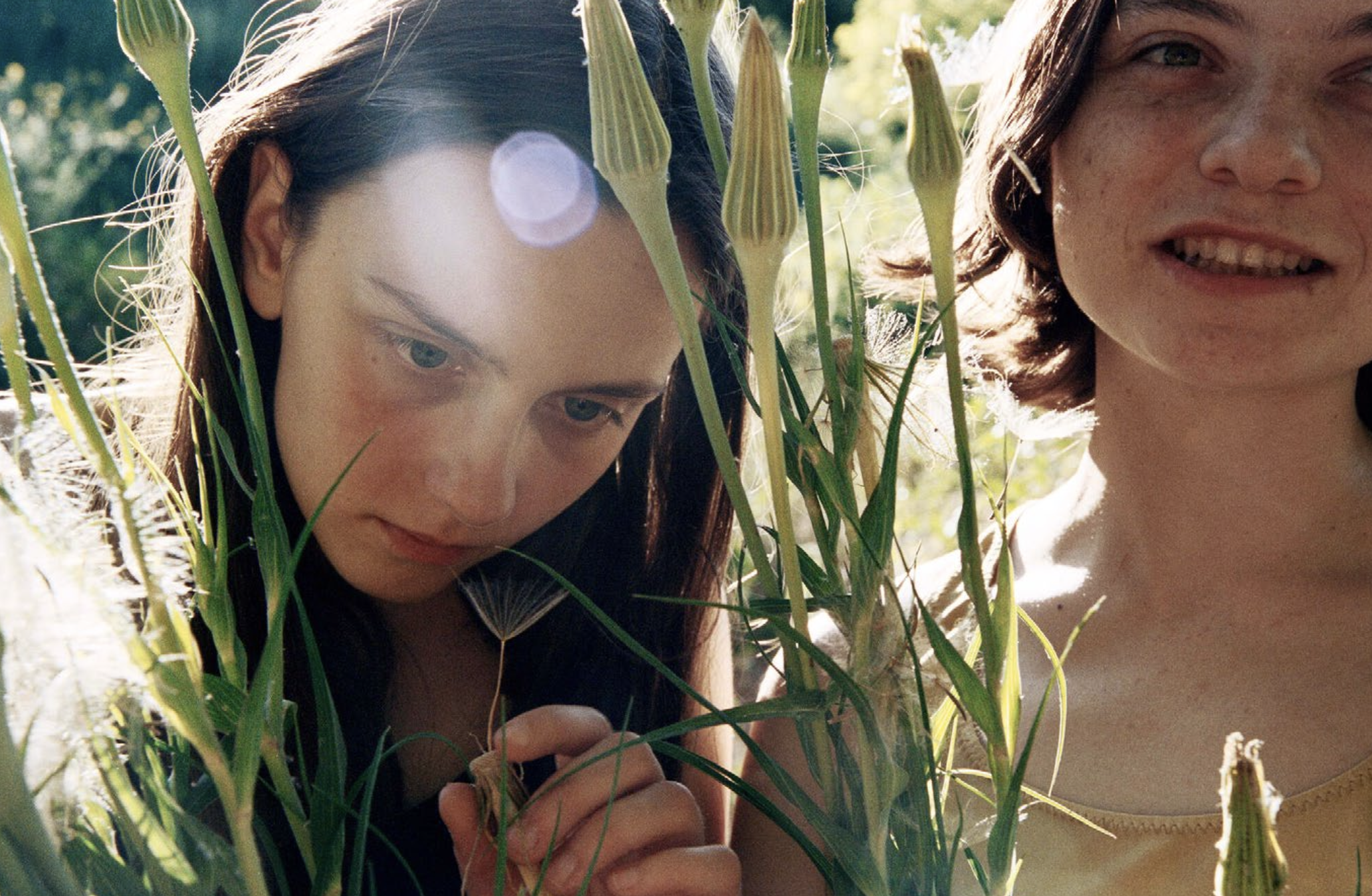
The most widely published image from Odesa shows two young Ukrainian women surrounded by nature. The photograph is backlit, revelling in the warm light of a summer afternoon while avoiding any uncomplimentary shadows on the subjects' faces. The closeness of the lens to the subject suggests a secret place, a place with the same possibility as the youth of the girls, and the possibility of friendship. That the photographers here embracing beauty (including Elena Subach, Ira Lupu and others across the portfolio) are female seems significant. Brand (2000) believed that young female artists are aware that beauty is a double-edged sword and could be a tool for destabilising rigid conventions and well as reinforcing them. At the turn of the century Steiner (2001b) felt that beauty was being detangled from a misogynistic view of femininity and was ready to embrace the idea of male beauty (as with Chelbin's prisoners) and the return of the female subject (as with Yemchuk).
The nostalgic romanticism to Yemchuk's Odesa work is because, she says, she is "very much in love with Ukraine"28From an interview with Whitfield in i-D (2022).. Her best-known photograph appears loaded with what Campany (2007) calls the journalistic poetics of an image. As Bate (2000/2009) says, there is something about picturesque photos that cannot be dismissed, that is, the pleasure they give. Yemchuk has made this image easy to engage with while we are bombarded with distressing photojournalism from the country. "Ukraine needs interesting stories telling about it, not just the war," says Dana Pavlychko, editor of Ukrainian photography magazine Saliut29British Journal Of Photography interview with Hester Underhill (2022).. Ukrainian photographer and curator Ira Lupu has similar aims with the exhibitions she has been putting on in New York and Britain's Wembley Park. They feature work from a range of Ukrainian photographers including Yemchuk and Elena Subach, aiming to provide a counter narrative to the images of war and show the world what Ukrainians are fighting for30Talking at Seeing Ukraine event at the New York Library (2022).. As Baudrillard (1998) points out, "photography conveys the state of the world in our absence," making this representation of the beauty of everyday Ukrainian life especially important while this everyday is taken away by war. Yemchuk and Lupu are working within Sontag's (1977) notion that photography proves a thing has happened, that beauty and possibility existed in Ukraine and therefore might again. It is important to note that this representation was important for Mikhailov too, as he thought that his subject would either be wiped out of history by Soviet realism-like censure, or wiped out by their own fragile mortality.
Conclusion
"There is probably no subject that cannot be beautified," claims Sontag (1977), with Bate (2009) adding that turning an ugly object into an appealing one does little more than showcase the skill of the photographer. Adorno (1970) believed that it is the obligation of art to highlight, without flinching, as Mikhailov does, ugliness imposed by any unjust system, and we should be mindful of beauty's ability to distract us from the inhuman realities of capitalism. So are Chelbin and Yemchuk pulling their punches in their images of Ukraine? Are they, as Pollock (2013) describes when talking about beauty's dangers, merely seeking to pacify, console, entertain, distract? I would argue that there is as much criticality or ethicality in their work as in Case History. So was Mikhailov wrong to further brutalise and make objects of the abject homeless of Kharkov? As Nordgaard (2016) points out, by placing these wounded bodies in the most highly regarded galleries, he is asking us to see them as subjects, "as people in pain". Beech decides that the "controversy about beauty" comes down to rival standpoints, the traditionalists siding with order and beauty and the avant-garde choosing disorder and shock. Both have their place, but ultimately it comes down to timing. Ukraine needs the optimism of beauty more now than in 1999 when Case History was published.
Notes
- In Dictionnaire Philosophique, but see also Plato, Winkelmann, Kant, Hume, Nehamas, and many others, for more on the subjective and social nature of beauty. ↩
- John Coplans, interviewed by Robert Berlind for Art Journal (1994) [reprinted in Art And Photography (2007)] angrily declared that our culture agrees that "old is ugly". ↩
- Adorno says, "in short poverty is ugly" (1970). ↩
- Reprinted in Art And Photography (2007), as well as quoted in Photography: The Key Concepts (2009). ↩
- All the work discussed in this essay, and collected in the portfolio, was made before the Russian invasion of Ukraine. ↩
- Neither the portfolio nor this discussion includes photojournalism, instead focusing on work made for photobooks and the gallery sector. Michal Chelbin and Yelena Yemchuk are commissioned for editorial and fashion photography, work that sits aside, but has an influence on, their photos discussed and shown here. ↩
- In a letter to Louise Colet. ↩
- He went beyond merely calling for the return of beauty in art by curating the 2001 Santa Fe biennale, Beau Monde: Toward a Redeemed Cosmopolitanism. ↩
- Three of the subjects in the first sequence in the book were dead within two months of the project starting, something Mikhailov says was "doomed to happen". ↩
- Misiano (2009) points out that so important is this performative element to Mikhailov's work that he underlines it by being in the photos, even handing over money on camera to his subjects. Mikhailov has talked of the transactional element mirroring post-Soviet society, but also of a moral need to help these people survive. ↩
- Mikhailov lost his job in 1966 when it was discovered he had taken naked photos of his wife. ↩
- See work by the Kharkiv School in the portfolio from Viktor & Sergiy Kochetov, and Evgeniy Pavlov including naked bodies from Roman Pyatkovka. ↩
- A conversation at Photo London 2022 with the Alexandra de Viveiros gallery, representing the Kharkiv School, revealed that there had been no sales of the school's raw work, which was contrasted by the popularity of Elena Subach's crisp and saturated photos at the same event. ↩
- "I am old-fashioned enough to believe that beauty exists as an end in itself," he wrote in his Daybooks in 1932. ↩
- Despite the fashion in some circles for body hair, this norm has arguably changed little since 1999. ↩
- Misiano (2009) points out that as cheap cameras and colour process took hold in post-Soviet vernacular photography, black and white started to become synonymous with an aesthetic approach. ↩
- Interview in Beyond Memory: Soviet Nonconformist Photography and Photo-related Works of Art (Neumaier, 2004). ↩
- Quoted in a conversation with Victor Tupitsyn at the close of the Case History photobook. ↩
- As interpreted by Pollock in the Is Beauty Back? debate (2013). ↩
- It should be noted that due to the importance of relationship in ideas of beauty even bodily imperfections can be considered beautiful, as Charles Baudelaire found of his lover's smallpox scars (Henderson 2018), though that is not what is happening here. ↩
- Earlier in the book this cropped haired girl is shown topless, having her breast squeezed by another girl. She is skinny and has small breasts making aging her troublingly difficult. ↩
- "In photographing dwarfs, you don't get majesty and beauty. You get dwarfs," she writes curtly. ↩
- Speaking at How The Light Gets In festival's debate Is Beauty Back? (2013). ↩
- The post on Stockton Police Department Facebook page has received 96,000 "likes", 24,000 comments, and 11,000 shares. ↩
- "Probably the strongest criticism levelled at my work is that I'm making poetry of the Holocaust. But I've come to believe that beauty can be very powerful," he tells Melissa Harris in an interview in his Violent Legacies: Three Cantos book, reprinted in Art And Photography (2007). ↩
- Essay in Beauty (2009), edited by Beech. ↩
- British Journal Of Photography interview with Paul Stafford (2022). ↩
- From an interview with Whitfield in i-D (2022). ↩
- British Journal Of Photography interview with Hester Underhill (2022). ↩
- Talking at Seeing Ukraine event at the New York Library (2022). ↩
Bibliography
Adams, R. (1989). Beauty in Photography: Essays in defense of traditional values. Aperture.
Adorno, T. W. (1970). Aesthetic Theory. A&C Black.
Asavei, M.-A. (2015). Beauty and critical art: is beauty at odds with critical–political engagement? Journal of Aesthetics & Culture, 7: 27720.
Bate, D. (2009). Photography: The Key Concepts. Berg.
Beech, D. (2009). Beauty. MIT Press.
Benjamin, A. E. and Osborne, P. (1991). Thinking Art: Beyond Traditional Aesthetics. ICA.
Bjedarijeva, S. (2020). At the Front Line: Ukrainian Art, 2013-2019. International Renaissance Foundation.
Brand, P. Z. (2000). Beauty Matters. Indiana University Press.
Brogden, J. (2019). Photography and the Non-Place: The Cultural Erasure of the City. Springer.
Bull, S. (2009). Photography. Routledge.
Burke, E. (1759). A Philosophical Enquiry Into the Origin of Our Ideas of the Sublime and Beautiful. Oxford.
Campany, D. (2007). Art and Photography. Phaidon Press.
Chelbin, M. and Homes, A. M. (2012). Sailboats and Swans. Twin Palms Pub.
Chelbin, M. and Ollman, L. (2008). Strangely Familiar: Acrobats, Athletes, and Other Traveling Troupes. Aperture.
Charlesworth, J. and Harbison, I. (2016). Does beauty still matter in art? – Tate Etc (online). tate.org.uk. Accessed 4 July 2022.
Danto, A. C. (2013). What Art Is. Yale University Press.
Demircan, S. (2022). Revisiting Boris Mikhailov's Vision of Social Destruction (online). frieze.com. Accessed 28 August 2022.
Dexter, E. and Weski, T. (2003). Cruel and Tender: The Real in the 20th Century Photograph. Tate.
Doy, G. (2006). Picturing the Self: Changing Views of the Subject in Visual Culture. I. B. Tauris.
Durden, M. (2012). Fifty Key Writers on Photography. Routledge.
Ferrié, L. (2021). Richard Misrach's Landscape Photography: (Re)Framing the American Disaster (online). dumas.ccsd.cnrs.fr.
Foster, H. (2002). The Anti-aesthetic: Essays on Postmodern Culture. Bay Press.
Fry, R. (1909). An Essay In Aesthetics. New Quarterly.
Fulleylove, R. (2021). Michal Chelbin's tender portraits capture teens in uniform (online). creativereview.co.uk. Accessed 1 June 2022.
Gilbert-Rolfe, J. (1999). Beauty and the Contemporary Sublime. Allworth Press.
Henderson, G. E. (2018). Ugliness: A Cultural History. Reaktion Books.
Hickey, D. (2012). The Invisible Dragon: Essays on Beauty, Revised and Expanded. University of Chicago Press.
Higgins, K. M. (1996). Whatever Happened to Beauty? A Response to Danto. The Journal of Aesthetics and Art Criticism, 54: 281.
Hingley, O. (2022). Yelena Yemchuk's photo series Odesa documents a Ukrainian city undergoing momentous change (online). itsnicethat.com. Accessed 29 August 2022.
Hirsch, C. (2011). The Locked Gaze: Michal Chelbin's Prison Portraits. The New Yorker, August 15, 2011. newyorker.com. Accessed 1 June 2022.
Hirsch, R. (2017). Seizing the Light: A Social & Aesthetic History of Photography. Taylor & Francis.
Hume, D. (1757). Of the Standard of Taste. Liberty Classics.
IAI (2013). Is Beauty Back? (HowTheLightGetsIn festival debate). IAI (online). iai.tv. Accessed 31 May 2022.
Jaeger, A.-C. (2007). Image Makers, Image Takers: The Essential Guide to Photography by Those in the Know. Thames & Hudson.
Jones, J. (2012). When did modern art become so reluctant to embrace beauty? The Guardian, May 2, 2012. theguardian.com. Accessed 29 August 2022.
Johnson, K. (2011). 'Boris Mikhailov: Case History' at MoMA - Review. The New York Times, June 2, 2011. nytimes.com. Accessed 27 August 2022.
Kan, E. (2022). A Photographer's Love Letter to Odesa (online). aperture.org. Accessed 29 August 2022.
Kant, I. (2003). Observations on the Feeling of the Beautiful and Sublime. University of California Press.
Kinsella, K. (2011). The People Who Got into Trouble: Boris Mikhailov's Case History at MOMA (online). bombmagazine.org. Accessed 31 May 2022.
Kirwan, J. (1999). Beauty. Manchester University Press.
Levinson, J. (2005). The Oxford Handbook of Aesthetics. Oxford University Press.
Lorand, R. (2002). Aesthetic Order: A Philosophy of Order, Beauty and Art. Routledge.
Mey, K. (2006). Art and Obscenity. Bloomsbury Publishing.
Mikhaĭlov, B. (2007). Suzi Et Cetera. Walther Konig.
Mikhailov, B. (1995). Boris Mikhailov. Okagon.
Mikhailov, B. (1999). Case History. Scalo Publishers.
Mikhailov, B. (2003). eine Retrospektive. Scalo.
Mikhailov, B. (2004). Look at Me I Look at Water, Or, Perversion of Repose. Steidl Dap.
Mikhailov, B. (2002). Salt Lake. Steidl Dap.
Mikhailov, B. (2001). The Hasselblad Award 2000: Boris Mikhailov. Scalo Verlag Ac.
Mikhailov, B. (1998). Unfinished Dissertation. Scalo Publishers.
Misiano, V. (2009). Afterall - The Ethics of a View: Notes on Boris Mikhailov (online). afterall.org. Accessed 25 August 2022.
Misrach, R. (2020). Richard Misrach on Landscape and Meaning. Aperture.
Mrázková, D. and Remeš, V. (1986). Another Russia: Through The Eyes Of The New Soviet Photographers. Thames & Hudson.
Neumaier, D. (2004). Beyond Memory: Soviet Nonconformist Photography and Photo-related Works of Art. Rutgers University Press.
New York Public Library (2022). Seeing Ukraine: Ira Lupu, Alex Majoli, Susan Meiselas, Rafał Milach, Fred Ritchin. YouTube (online). youtube.com. Accessed 24 August 2022.
Nordgaard, I. (2016). Documenting/Performing the Vulnerable Body: Pain and Agency in Works by Boris Mikhailov and Petr Pavlensky. Contemporaneity: Historical Presence in Visual Culture, 5: 85–107.
Premiyak, L. (2022). Ones To Watch 2022, Elena Subach. British Journal Of Photography.
Prettejohn, E. (2005). Beauty and Art: 1750-2000. OUP Oxford.
Rosler, M. (2013). In, Around and Afterthoughts (On Documentary Photography). In: Basic Critical Theory for Photographers. Routledge. pp.128–139.
Santayana, G. (1896). The Sense of Beauty. Cosimo, Inc.
Sartwell, C. (2012). Beauty (online). plato.stanford.edu. Accessed 27 August 2022.
Scruton, R. (2011). Beauty: A Very Short Introduction. Oxford University Press.
Searle, A. (2001). Citibank Photography Prize Review (online). theguardian.com. Accessed 28 August 2022.
Slate, R. (2009). On The Invisible Dragon, Essays on Beauty by Dave Hickey & Beauty, essays edited by Dave Beech – On the Seawall (online). ronslate.com. Accessed 29 August 2022.
Soth, A. (2021). From Kardashian to Mikhailov. YouTube (online). youtube.com. Accessed 1 June 2022.
Soanes, C. and Stevenson, A. (2006). Concise Oxford English Dictionary. Oxford University Press.
Sontag, S. (1977). On Photography. Macmillan.
Soutter, L. (2013). Why Art Photography? Routledge.
Stafford, P. (2022). Yelena Yemchuk's Odesa: A floating dreamland (online). 1854.photography. Accessed 4 July 2022.
Stallabrass, J. (2004). Art Incorporated: The Story of Contemporary Art. Oxford University Press, USA.
Steiner, W. (2001a). Venus in Exile: The Rejection of Beauty in Twentieth-century Art. Simon and Schuster.
Steiner, W. (2001b). Wendy Steiner On The Trouble With Beauty (online). tvo.org. Accessed 3 July 2022.
Stolnitz, J. (1961). "Beauty": Some Stages in the History of an Idea. Journal of the History of Ideas, 22: 185–204.
Subach, E. (2022). Elena Subach — Елена Субач (online). elenasubach.com. Accessed 5 July 2022.
Underhill, H. (2022). Creative Brief: Dana Pavlychko, Saliut magazine (online). 1854.photography. Accessed 30 August 2022.
Walker, J., Ursitti, C. and McGinniss, W. (1991). Photo Manifesto: Contemporary Photography in the USSR. Stewart Tabori & Chang.
Wells, L. (2021). Photography: A Critical Introduction. Routledge.
Weston, E. and Nyerges, A. L. (2004). Edward Weston: A Photographer's Love of Life. Dayton Art Institute.
Whitfield, Z. (2022). Photographing Odesa, a Ukrainian city unlike any other (online). i-d.vice.com. Accessed 29 August 2022.
Williams, G. (2001). Boris Mikhailov. Phaidon Press Limited.
Yemchuk, Y. (2010). Gidropark. Ediz. Inglese. Damiani Editore.